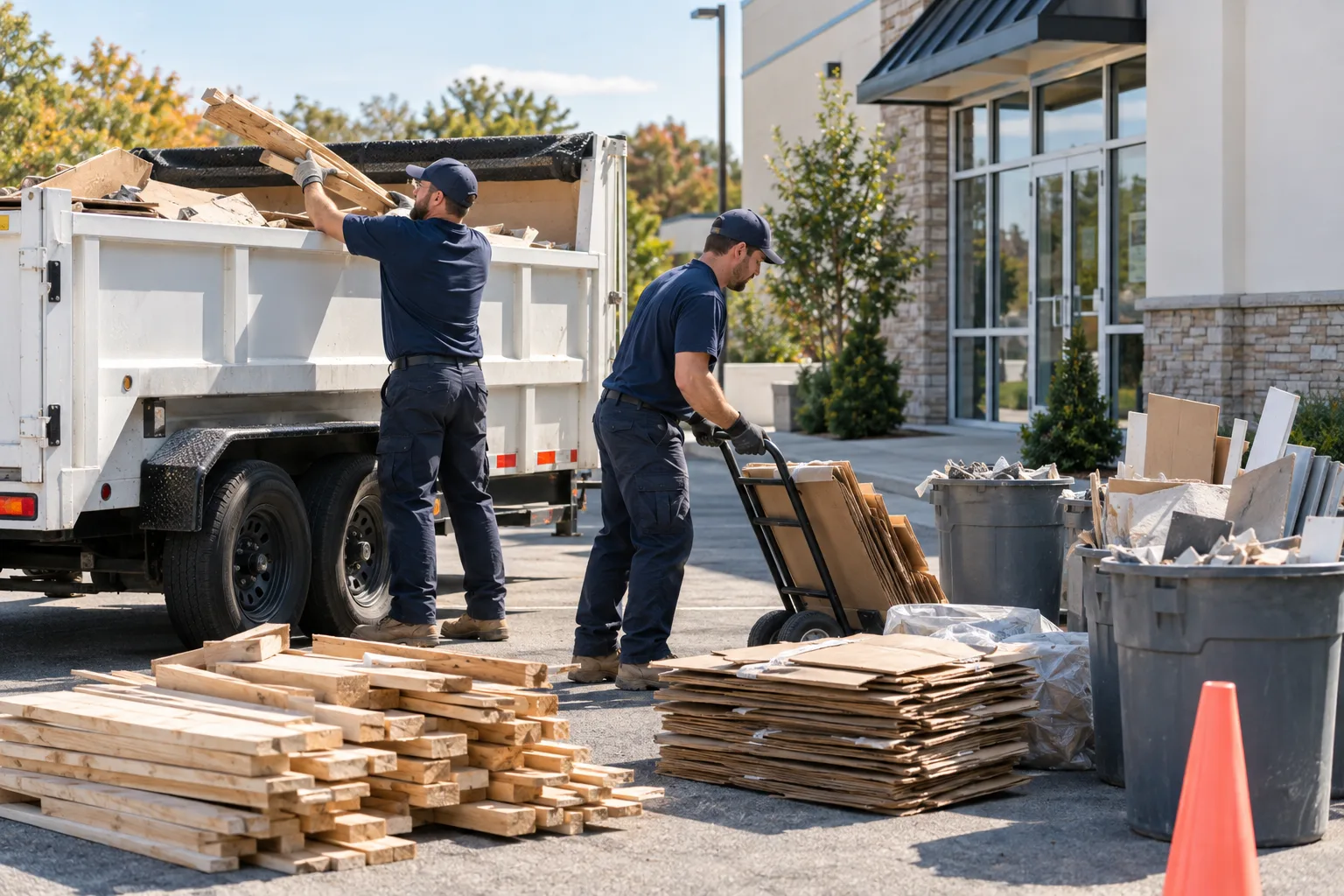
Separate renovation debris before it becomes one mixed pile. Keep clean wood, flattened cardboard, metal fixtures, dense masonry, ordinary bagged debris, appliances, and hazardous or unknown material in different groups. That makes the load easier to assess and prevents one questionable container from contaminating everything around it.
Use six simple groups
| Group | Typical material | Planning note |
|---|---|---|
| Clean wood | Unpainted offcuts, framing pieces, pallets | Pull nails only when it can be done safely; otherwise point them out. |
| Cardboard | Clean flattened boxes and packaging | Keep dry and separate from dust and wet debris. |
| Metal | Fixtures, shelving, pipe, hardware | Remove sharp protrusions or flag them clearly. |
| Dense material | Concrete, brick, tile, soil | Small volume can still carry substantial weight; disclose it. |
| General debris | Drywall, trim, flooring, nonhazardous mixed scraps | Bag small pieces and keep the walking path clear. |
| Restricted | Wet paint, solvents, fuel, asbestos-suspect material, chemicals | Keep out of an ordinary junk load and seek the correct disposal route. |
Density matters as much as volume
A half-truck of flattened boxes is not the same job as a half-truck of broken concrete. Tell the removal provider about tile, masonry, roofing, plaster, soil, or other dense material before the visit. Do not hide dense debris under light material to make the pile look smaller.
Keep hazardous material out of the pile
The U.S. Environmental Protection Agency recommends separating hazardous waste from nonhazardous debris so it does not contaminate otherwise manageable material. EPA also notes that early segregation can support reuse and recycling of wood, metal, electronics, vegetation, appliances, concrete, asphalt, and other streams. Applicability: general U.S. debris-management guidance. Retrieved September 22, 2026. Review EPA debris-planning guidance.
Suspected asbestos, mercury devices, lead-containing material, chemicals, pressurized cylinders, and unknown liquids need professional identification or an approved waste route. Do not break, sand, cut, or open a questionable material to find out what it is.
Prepare the access route
- Keep exits, stairs, and active work areas clear
- Stack material where it will not fall, roll, or block drainage
- Bag small sharp fragments in a container suited to their weight
- Identify live utilities and unfinished openings
- Keep children, pets, tenants, and customers outside the loading path
- Share parking, loading-zone, gate, and building-hour limits
Questions to ask a removal provider
Ask whether the crew accepts the specific material, whether weight changes the estimate, how appliances are handled, and what must be separated. A photo can help with planning, but an on-site assessment may still be needed for a firm estimate.
For a sorted, nonhazardous load, see construction debris removal. If demolition is still required, describe the structure and materials before scheduling light demolition. Call (256) 550-8466 to discuss the job.